

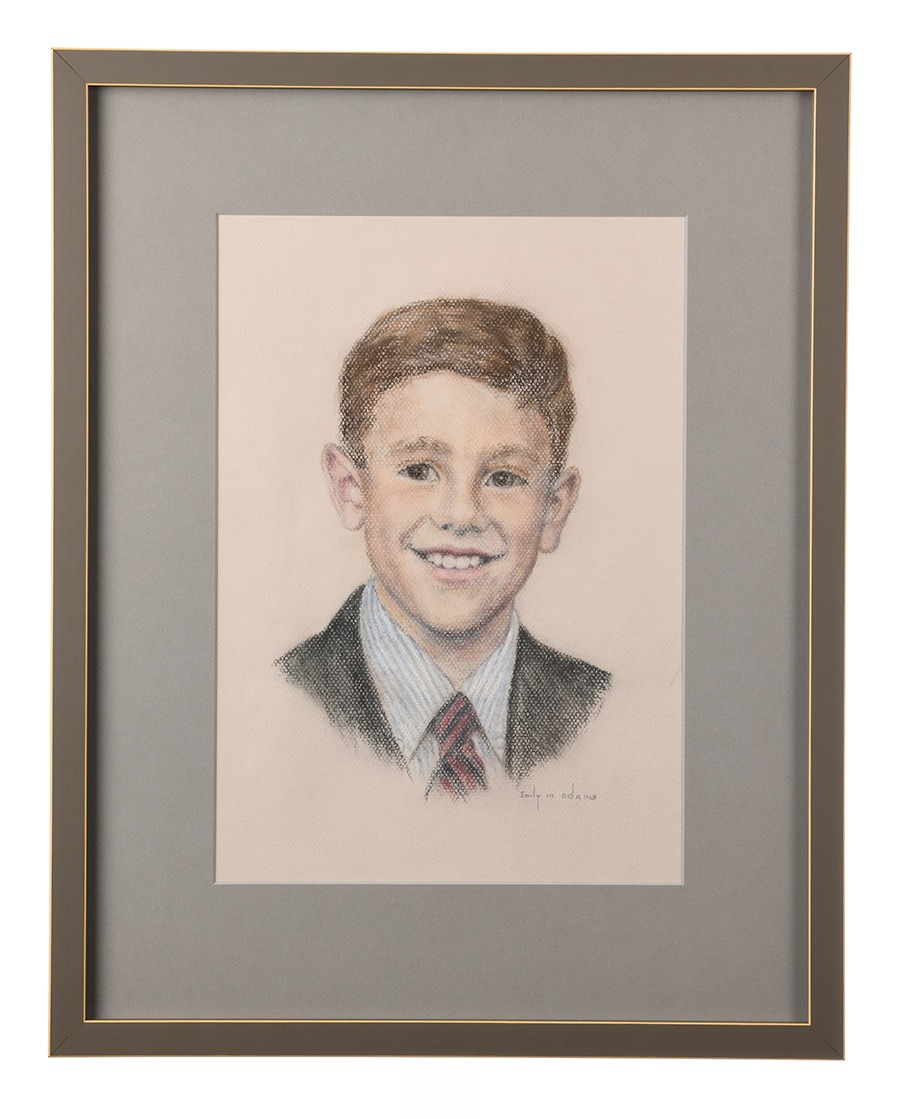
I see photos and videos of pastel portraits for children all over social media. Most of them are digital renderings and photo filters, but a few posts are of the real deal. It’s easy to write this portrait style off as a trend, something pretty and different from a photo. However, commissioned pastel portraits, especially of children, have a strong history dating back to the 17th century. It’s been a popular medium in Maryland for hundreds of years and a way for families to immortalize their children’s likeness.
What is a Likeness?
In portraiture, a likeness is when the artist not only captures what their subject looks like, but also their personality. A pastel portrait likeness is a little different from a photograph because a photo is expected to be reality. You can see this in how people call out celebrities for excessive retouching in magazines and on social media. A pastel portrait artist isn’t bound by the same expectations and rules; their portraits can be interpretations of their subject.
Pearl Oxorn described commissioned portraits and likeness best in her December 21st, 1980 profile on Maryland artists Dorothy Redding and Stephen Perrine in The Baltimore Sun:
Dorothy Redding is an artist who carries on the tradition of commissioned portraiture which flourished during the Renaissance, when a new awakening to man’s importance–and each man’s unique individuality–took place. Man became the measure of all things, and this contributed to an exalted sense of self-worth that found expression in the portrait: an enduring likeness of the person and a revelation of character with universal implications, the many in the one.
Historically, artists included hints about their subjects’ sex, social status, and interests using clothing, props, and poses. Commissioned painters collaborated with their patrons to create portraits that served as Karin Calvert describes as “a visual representation of society’s expectations, with the subject tidied up for public viewing.”
In 1950, Baltimore artist Charles Cross said in an interview with The Baltimore Sun, “I believe that one can emphasize the positive qualities, the good features, of one’s subject without any real distortion.” He spoke about collaborating with his subjects and their families to faithfully record what they wanted captured, such as removing blemishes and softening lines on their faces. He called himself a “selective realist.” His many works included pastel portraits of children.
A Quick Review of Pastel Portrait History
Pastel portrait history is fascinating. The Metropolitan Museum of Art has a great description of pastel paintings. They write that pastels were “made by mixing powdered pigments with a binder (usually gum arabic), shaping this mixture into sticks, and leaving it to dry. These crayons or sticks of pigment are very crumbly and their colored powder adheres only loosely to paper, which was often roughened in advance to create a surface for the material to cling to.” Pastels create a soft, iridescent quality that adds a lifelike effect to the portrait.
Chalk art dates back to prehistoric times, but the pastel art we’re familiar with became prominent in the 17th century. Thea Burns explains that as portrait painting rose in popularity, pastel painting became “a socially appropriate substitute for oil painting.” Ready-made pastel sets made traveling easier for artists. This medium required fewer sittings and was less expensive than oil paintings. Much of this is still true today.
In early 1700’s France, the aristocracy, following Louis XV from Versailles and to Parisian private homes, decorated their empty walls with art by Dutch and Flemish artists, contemporary drawings, and pastel portraits. Oxorn wrote that pastels “prevailed during the Rococo period, when they perfectly reflected the grace and frivolity of pre-revolutionary aristocratic society.”
Why are Pastel Portraits of Children Important?
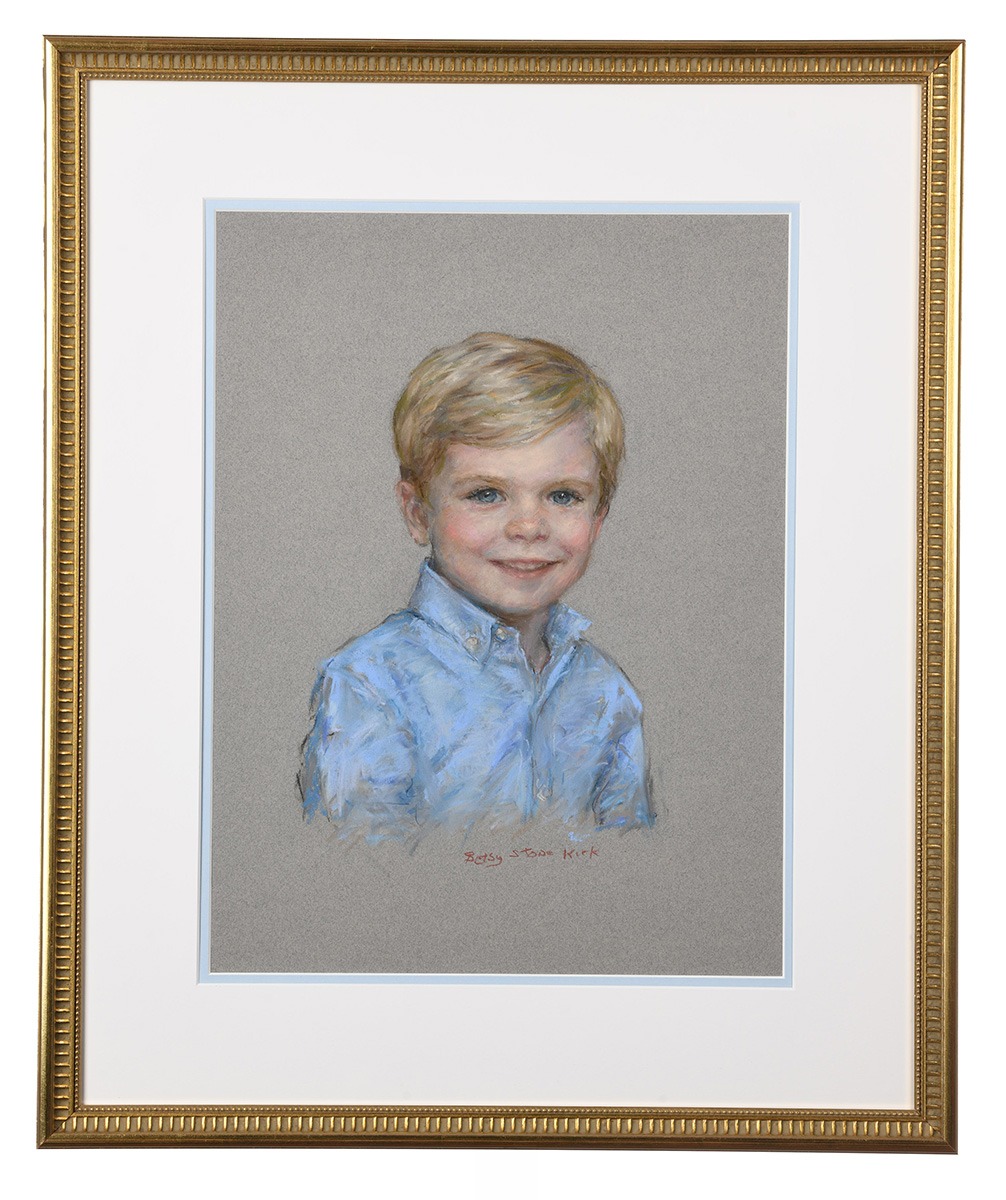
In the 17th century, families commissioned portraits of children that portrayed them as mini-adults. In the 18th century, children’s portraits became a little more playful. Calvert writes, “The security that came with improved infant mortality rates, particularly in Maryland and Virginia, allowed parents to make strong emotional investments in their offspring. The growing affluence and increased leisure of the upper and upper-middle classes encouraged parents to indulge their children and enjoy their antics.” For some, pastel portraits were a status symbol. For others, it was a way to celebrate their children.
In Baltimore, photography studios and department stores capitalized on this. Old newspapers from the mid-1800’s through the 1980’s have advertisements for pastel portraits, especially around Christmastime. They featured blurbs about recently completed pastel portraits and those on display in local art galleries. A few artist profiles noted that many local artists specialized in pastel portraits of children.
In a 1988 article in The Baltimore Sun, Petey O’Donnell interviewed three portrait artists–Elizabeth Bird Mitchell, Betsy Stone Kirk, and Raoul Middleman–along with a few of their clients. One parent said, “There’s something about a portrait, something about sitting and getting an artistic interpretation that has a certain realism that even a photo doesn’t capture.” This parent said they commissioned a pastel portrait to continue a tradition; they had a 100-year-old pastel portrait of their grandparents and wanted one of their children.
Today, people gravitate toward pastel portraits because they feel inundated with photos. They want something more: a likeness. Some people still view portraits as a status symbol. For others, it’s an investment in a family heirloom. In an article for Mansion Global, Shivani Vora writes, “The endless scroll of snapshots on our cellphones is leading some to crave something a little different or special when it comes time to hang a family portrait…The aim is a lasting work of art–a contrast to images that are easily captured and zhuzhed with AI.”
How to Care for Pastel Portraits
Pastel portraits are notoriously fragile. Many artists did not–and some still do not–fix their image to stabilize the pastel. Older fixer formulas yellowed and changed the portrait’s colors. As a result, it’s very easy to disturb the pastel and cause damage. Here are a few common issues we see in our studio:
Smudging
Pastels can smudge very easily. Someone may nudge it by accident, or they may touch a corner because they just can’t help themselves. This smudges the piece and impacts the overall effect. Some artists put a protective mat or paper over their work to prevent this. If you need to handle the work, keep your hands as far away from the pastel as possible.
Improper Framing
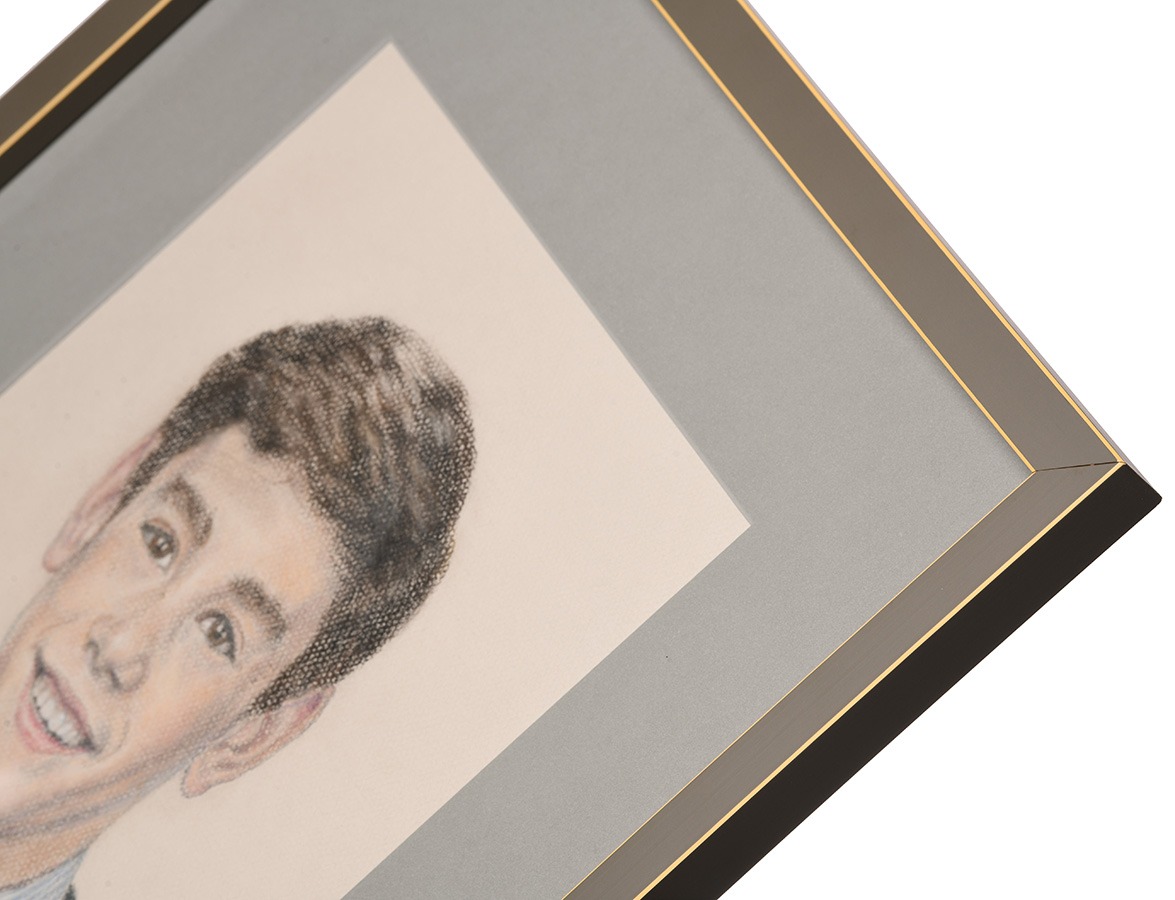
Pastel portrait framing techniques haven’t changed much over the years. In the 17th century, pastels were framed behind “white” glass “to preserve paintings from physical surface damage, insects, dust, and smoke.” Experts wrote about creating air space between the art and the glass using spacers or mats. Our archival materials have improved tremendously, but the process is still the same. Pastels need that air space. Without it, the pastel will transfer to the glass. It’s horrifying to remove a pastel and see an imprint of the subject’s face on the glass.
Vibration
While framing protects the pastel portrait, it’s still very fragile. Powder will fall with one good bump. We can see the damage when we open the frame; bits of color will sit on the mat and in the bottom of the frame. The phrase “Handle with care” was made for pastel portraits.
Other damage we see in our studio includes molding, foxing, insect damage, and other paper-specific degradation. Pastels can fade and are subject to static once framed. It’s important to choose the right UV-protectant glazing and housing. Some people don’t realize what they have and try to clean a pastel. We’ve seen people inadvertently wipe off half of a face by trying to clean their piece.
When unframed, pastel portraits should be stored flat and face up. Do not try to scan a pastel. Pieces like these need to be photographed, as flipping the piece over and placing it on glass will potentially ruin the artist’s work. Do not roll or fold a pastel portrait (for obvious reasons).
As fragile as an authentic pastel portrait is, you should enjoy and treasure it. We love framing pastel portraits of children and creating something families will cherish. If history proves anything, it’s that these portraits will be loved–and in style–for generations.

Related Posts
Confabulation in Photo Restoration: Preserving Family History for the Future
Confabulation in photo restoration happens to both humans and artificial…

Belief in the Album: A History of Family Photo Albums
The family photo album has been a staple in homes since the 1850s. Learn about…
Art with Lore: Don’t Force It
The best art collections are personal. There are a few ways to create your own…