

We walk a delicate line as photo restorers. As trained photographers and darkroom experts, we know what photographs should look like. We understand photo composition and the photographer’s intention. We can see why a chair was placed in a certain spot or why a head was angled in a specific way. It’s easy to identify photo damage and plan for what needs repairing.
However, this knowledge and experience can make our process tricky. Let’s say you want to restore a photo of a family standing on a sidewalk. One kid is standing in front of a stop sign, and it looks like the sign is coming out of his head. We know the photo will look better if we remove the sign. Do we leave it or remove it? Some clients would want it gone. Other clients would tell us to leave it because the sign is central to several family stories.
It’s not our job to alter the integrity and accuracy of the photo; it’s our job to preserve the photo’s history and story.
Artificial intelligence (AI) photo restoration is different. Many programs use an algorithm made from stored data and mathematical probability to create the best possible photo, regardless of accuracy. It’s fun to play with, but the results can be frustrating and disappointing for many people. AI cannot make the same subjective decisions humans can.
Identifying Hallucinations
Now, this is the point in some articles where the author will rail against AI and shame people for using it. I’m not going to do that. However, I want to point out that AI photo restoration frequently confabulates or hallucinates information. This means that it produces false information, which creates inaccurate photo restorations.
Examples of this include:
- Changing facial structure and hair
- Modernizing clothing
- Using historically inaccurate colors
- Removing items from the background
- Adding items or people to the photo
Sometimes, the final photo restoration is completely different from the original. I recently listened to an episode of The Photo Detective where guest genealogist Jen Schaefer discussed something very disturbing. A stranger took her family photos from her online family tree, restored them with AI, and reposted them to her family tree. Not only were the photos completely different from the originals, but she also had to fight to get them removed from her personal tree.
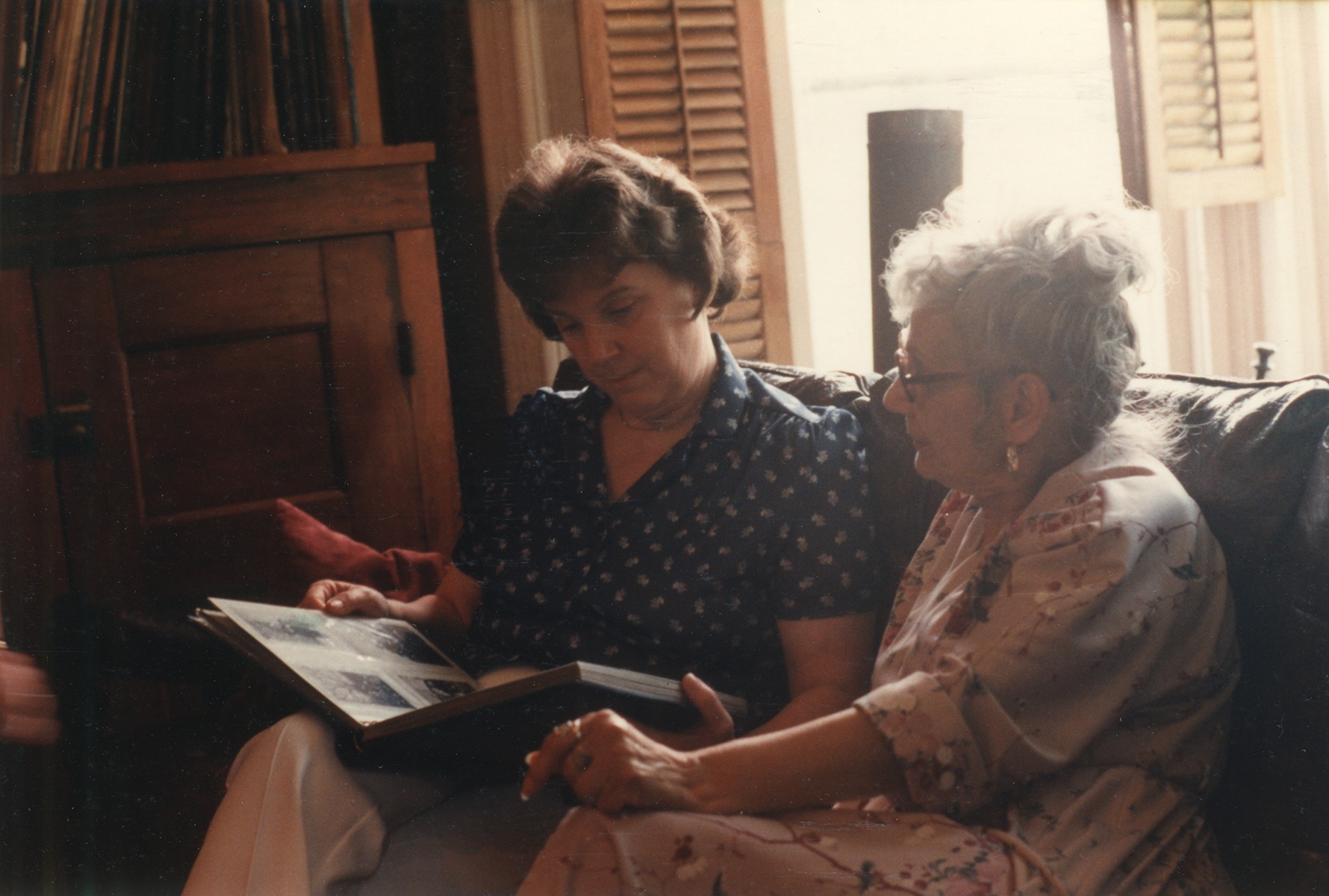
This is why it is so important to keep your original photos. Hopefully, Shaefer’s story is the exception and not the rule. However, our clients often have to fight with family members over edits they want to make to their family photos. Some relatives want to change photos because they confabulate their memories; they believe a person looked different and the photo is lying.
We receive requests to change family members’ faces because their nose was smaller in real life or their ears need to look different. Maybe it’s true; their facial features did look different in real life. However, the photo shows something else. Our faces can change with a small tilt of the head. Anyone who has ever taken a selfie with their camera raised slightly above their head knows this. You look a little slimmer than when you take a selfie from under your chin.
When we get these requests, we know the photo is fighting someone’s memory. The photo is important, and we try to meet our clients’ needs. Yet some family members do not want that edit. They want the photograph as shot, restoring only what needs to be restored. In those cases, we make two versions, and each family member is happy.
Altering Family History
But we worry a little for future generations. Sometimes, digital editing can give us too much freedom. We can erase almost everything we want to erase. Don’t like your ex-son-in-law? Get rid of him. However, that’s your grandchild’s father, and they–or their children–may want him in the photo when they get older.
This isn’t a new concept. People have been editing their photos in very permanent ways since the 19th century. Think about your family photos. Some of you may have images where a relative’s face is scratched or cut out. Relatives may have thrown away photos because they didn’t like how they looked. They may have changed their written family history because they wanted to hide a secret.
You end up wondering, “Why did they do this? I wish they didn’t treat the photos this way. I wish I had more information.” Future generations will wonder the same thing; they will not have the same baggage you do. They’ll be thrilled to see it and learn more about you, scars and all.
So what do you do? You can edit the photo however you like. There’s no need to suffer by looking at a photo with an imperfection that bothers you or at someone who was cruel to you. What makes us different from our ancestors is that we have the foresight to make a copy of the original with our desired edits and keep the original safe for future generations to learn from and review.
Many of our clients are genealogists and will appreciate this. We can see more of the big picture the further away we get from a particular moment (i.e., the photograph). Take a look at Abraham Lincoln biographies. We have hundreds of Lincoln biographies, so many that we can’t possibly need a new one. Yet the more we learn about history and expand our views, the more we can learn about and from Lincoln. Historians and writers go back to primary sources that have been reviewed thousands of times to glean new facts and interpretations. It never gets old.
Our original photos are exactly the same. Our family members will go back to photographs to learn more about us and our life right now. It’s important to remember that we can’t change history, but with photo editing, we can alter it. Whether it’s our team of human photo restorers or AI programs, we have a responsibility to protect our family history and preserve it for future generations.

Related Posts
Belief in the Album: A History of Family Photo Albums
The family photo album has been a staple in homes since the 1850s. Learn about…

Art with Lore: Don’t Force It
The best art collections are personal. There are a few ways to create your own…
Framing Inspiration: Find the Unexpected
The best art collections aren't about chasing trends. They're focused on…