

We love to tell people to “use what you have.” It’s a simple concept with a huge impact. Many of us have beautiful pieces of art sitting in our closets, drawers, attics, or garages. Some of the art is expected: photos, drawings, or paintings. Others are unconventional: objects, letters, or textiles. Whether you inherit your collection or curate pieces throughout your travels, you should put your art on display to love and enjoy. That’s what MC did. As an artist with a vision, she partnered with Mary Lou to breathe new life into her existing and meaningful art.
Tell us about your piece(s) (photo restoration, custom framing, or painting restoration). What did your project(s) mean to you? How did you feel about its original condition?
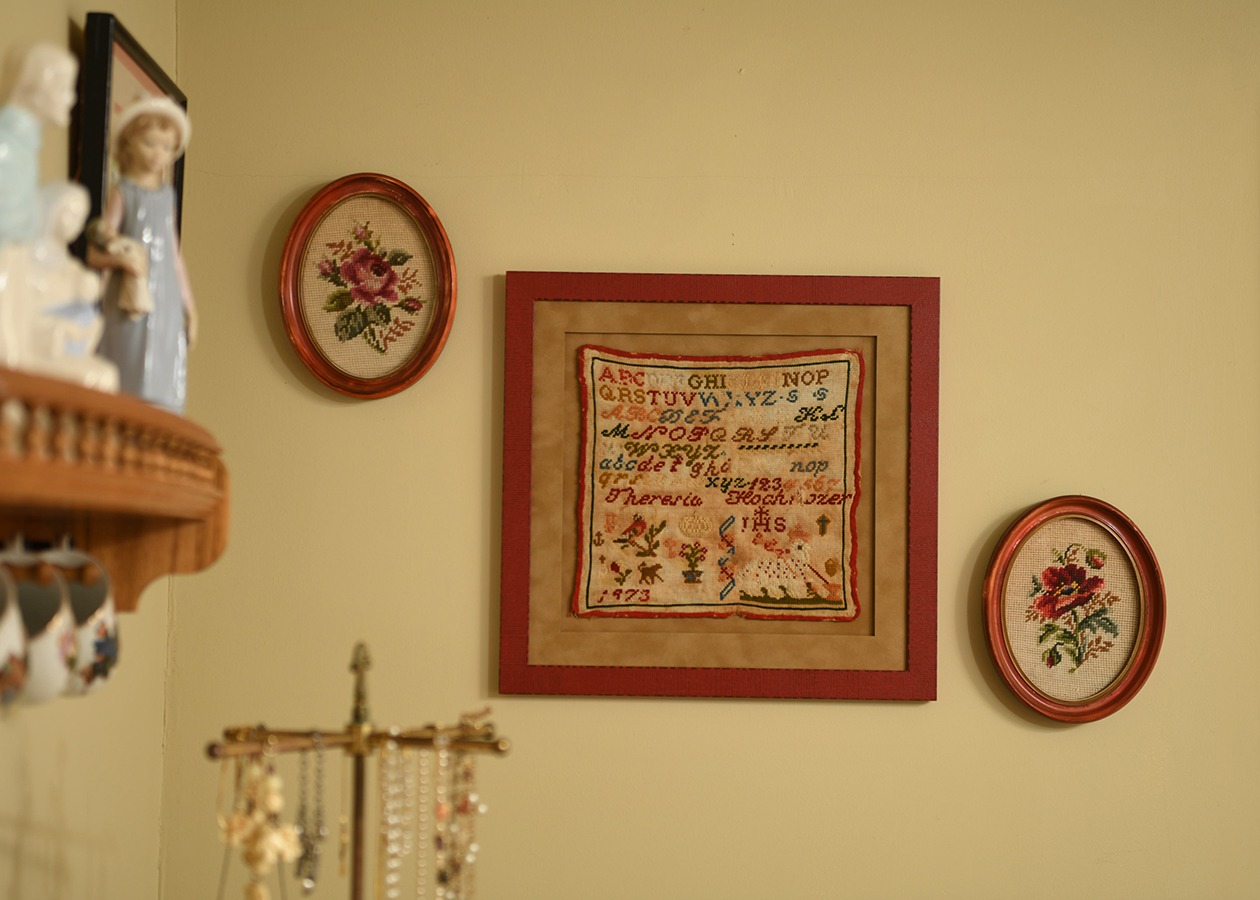
My Aunt died in 2016, and I was the executrix of the estate, so I was in charge of emptying her house and dispersing the contents. This task included artwork, of course. She was a great proponent of “posterity,” which she instilled in me, so the family items she had were particularly meaningful to me. She had 3 needlepoints hanging on her walls, which I had always been concerned that they were not framed properly to protect the work. The one is a sampler that my grandmother did (the thread of the date has begun deteriorating, so it looks like it was done in the 1900s, but it was the 1800s), and the other two are matching floral needlepoints that my great-aunt (her sister) did, according to the writing on the back. Didn’t know she did needlepoint! I knew the cardboard I could see on the sampler was a big no-no, and I had a feeling that the florals likely had the same. My aunt also had two works completed in the “fashion of theorems”. Knowing my aunt, all of these pieces were done in the “flavor of the times,” and our knowledge of conservation techniques and materials has definitely improved over the years. I also wasn’t too thrilled with all of the frames, so I was ready to redo a few.
People have varying experiences with restoration and custom framing. Some people have used professional services, have explored do-it-yourself options, or are completely new to the process. What did you already know about restoration or custom framing? Did you have any concerns or questions about the process?
My history includes a mixture of all. I have matted and framed my own artwork at home, framed works at “do-it-yourself” stores with supervision, had framers help with unusual matting or frame needs, and had work completely framed by others. Being a hands-on type of person, I’m always a little concerned with others’ work methods and care.
Everyone has different timelines for their projects. Some pieces sit on our clients’ shelves for years before they bring them in for restoration or framing. Others act straight away. How did you decide this was the right time to frame or restore your item?
Oh, my mother has made me a coupon/deal shopper! Child of a child of the Depression. Your interesting “gimmicks” always light a bit of a fire now that I made that first connection with your place. I have such a stash of frames that the “use what you have” option was very appealing. Too bad my stock and my works don’t tend to match well in size!
A before-and-after reveal is so exciting. How did you feel when you first saw the finished product? What reactions–if any–did you receive from your family and friends?
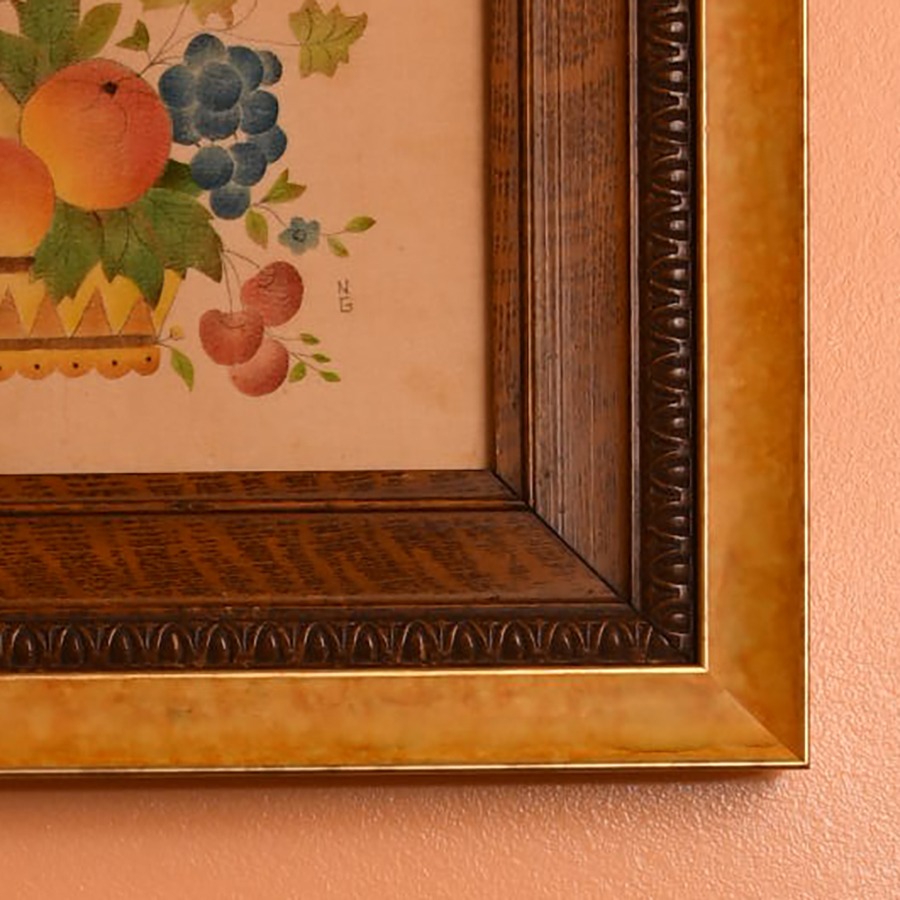
I was SO thrilled with the theorem that we kept the original frame, and Mary Lou suggested adding an outer frame! Never thought of nesting them that way before, and the effect for that piece was stunning. The sampler turned out fabulously, too! I felt so much better knowing it’s protected from moths and the effects of bad backerboard. Now I just have to figure out how to pass them down through the family in the future. No one has really seen them yet – my brother is one to ooh and aah over such things.
We always wonder what happens to projects after they leave our studio. They become very special to us. What did you do with your final piece(s)? How did you feel about the end result–especially when compared to its original condition?
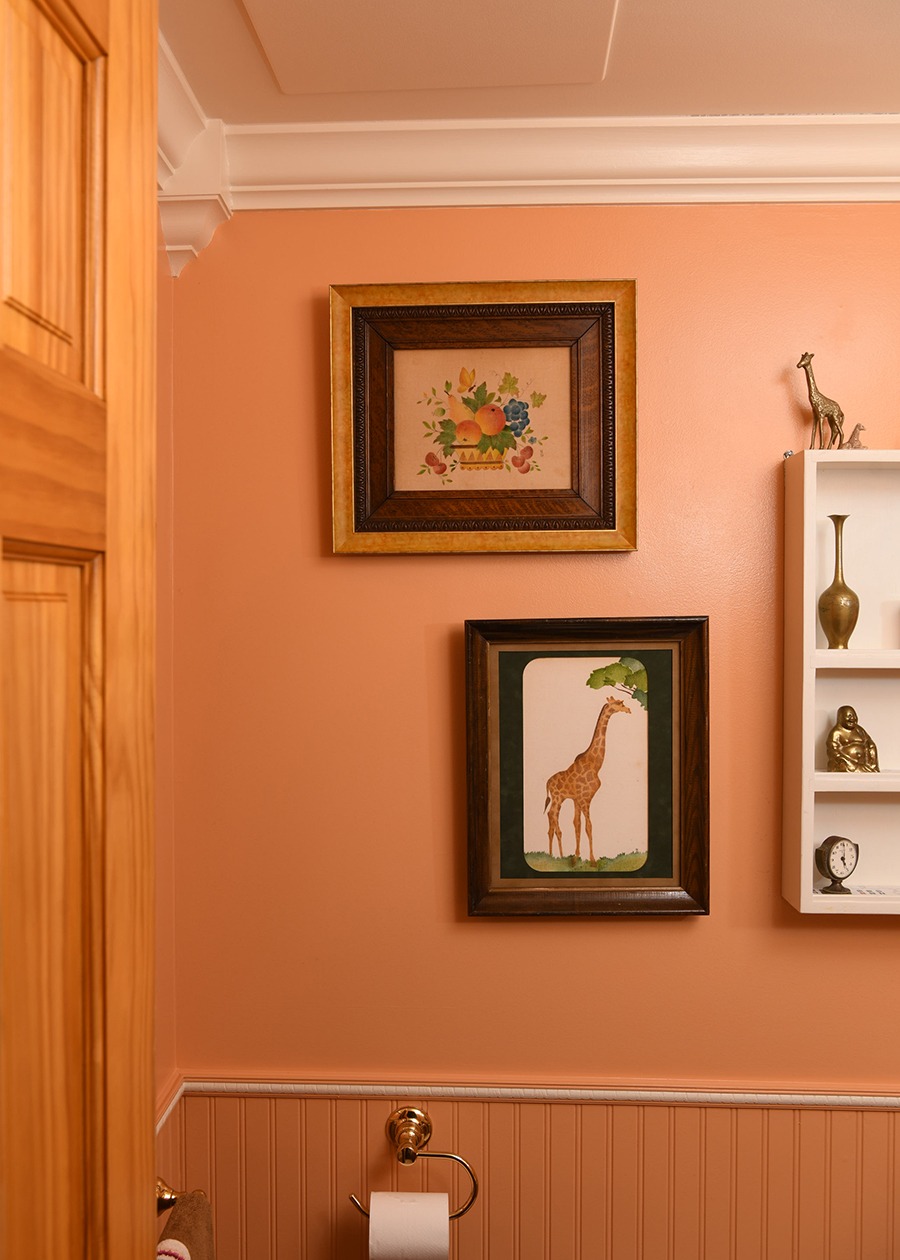
The pieces have returned to their original locations – the two theorems to my mini-gallery in a first-floor powder room (the giraffe theorem matches the brass giraffe family also located in there). My aunt had all of them in a vignette on and above her mantle, so they seem to belong together, and the three needlepoints have returned to their wall in my bedroom. Had to do a little rehanging since the sampler is a bit larger now with the extra frame edge, but they still fit their space well.
Was there anything about the process that surprised you? What was your favorite part?
I very much enjoy working with Mary Lou. She guides you through the process and allows you to have the deciding vote. Being an artist on my side, I am very particular about what I want and what I like – never really liked going to “real framing stores” back in the day because they always seemed pushed and opinionated, and I preferred to do my own picking. I liked the “Ben Franklin’s” of the day where, as long as there weren’t other shoppers, I could commandeer the area and pick my mats, colors, and frames by myself. Since Mary Lou is so familiar with her stock and all the options, she pulls out interesting mats and frames I may not have picked. The yellow frame around the fruit basket theorem was a major example of that. Her taste and mine seem to align well, which helps the process immensely.
What advice do you have for people looking to start their own restoration or custom framing project?
Don’t wait forever if it’s conservation that you seek. Time is not a friend, so too much delay may be irreversible in its effects. There’s a lot of satisfaction to be gained from having an idea and a plan and seeing it through. I now have a number of tasks on the to-do list completed, and that’s a great feeling, especially knowing they were done well and I don’t have to worry about their future.
Do you have anything else to add or want to share with readers?
Coyle Studios takes very good care of the pieces you entrust to them – down to reconstructing problematic frames (in the case of the one my giraffe now lives in) to saving the bits of information written on the backs of the artwork (how I knew my great aunt did the floral needlepoint – she signed it. Or maybe her sister – we discovered they had very similar handwriting from their parochial school training).

Related Posts


From Fair to Outstanding
The key to any successful surprise is listening. Nothing shows a person you…